
What Road Salt and Pollen Do to Your Siding

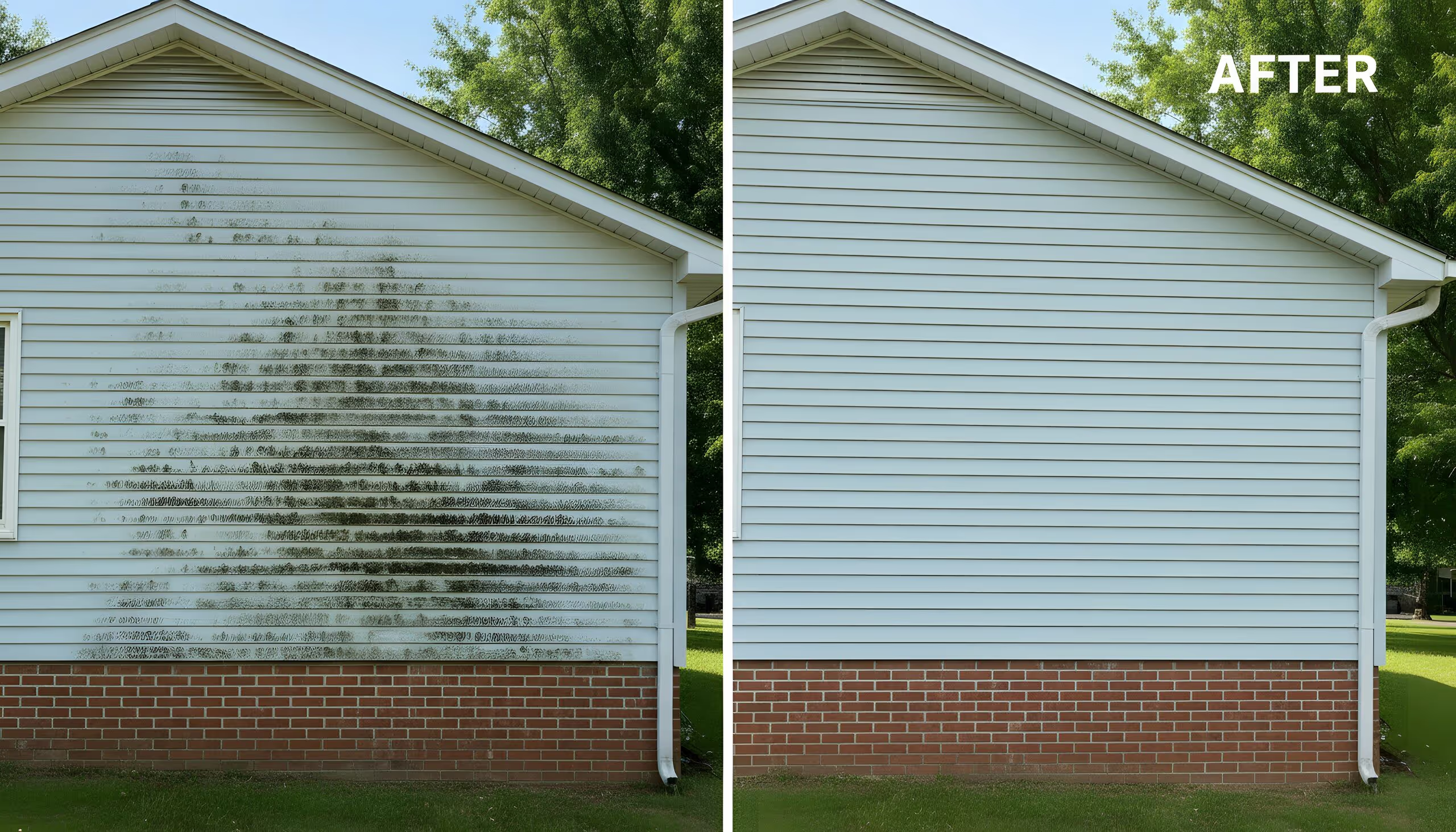
Living near a main road in this part of New Jersey means your house is on a schedule whether you set one or not. Winter puts salt on the siding. Spring puts pollen on top of it. The two are different problems, they arrive back to back, and the timing of when you wash decides whether you deal with them once or twice.
What road salt does
Every plow and spreader run throws a fine slurry of brine, sand, and grit off the pavement. It carries much further than people expect, particularly at highway speed, and homes along Route 23, Route 46, Route 80, and Route 202 catch a steady dose of it from December through March. Corner lots and anything facing a county road get their share too.
What lands on the wall is mostly on the lower third of the siding, and it is not just salt. It is salt bound into road grime, and it does a few things:
- It leaves a chalky white haze on darker siding that plain rinsing does not lift, because the residue is held in a film of oily road dirt.
- Salt is hygroscopic, meaning it pulls moisture out of the air and holds it against the surface. On a wall that would otherwise dry, that keeps things damp.
- The grit is abrasive, and abrasive residue sitting on a painted surface all winter is not doing the paint any favors.
- Around any exposed fastener, trim screw, or metal flashing, salt and standing moisture together start corrosion.
On vinyl the damage is slow and mostly cosmetic. On painted wood, aluminum trim, and older stucco, salt sitting through a whole winter is a real durability question, not just a looks question.
What pollen does
Then April arrives. Northern Morris and Passaic County sit under oak, maple, and pine, and the yellow-green film that coats everything for about six weeks is mostly pine and oak pollen.
Pollen on its own is loose and light. The problem is what it lands on. Pollen falling onto a wall that already has a winter's worth of salt and road film sticks to it, and the first spring rain turns the combination into a paste that dries down into a bonded layer. That is why a house often looks worse in May than it did in March, even after weeks of rain.
Pollen also feeds what is already growing there. It is organic matter, and the algae film on your shaded elevations treats a spring pollen fall the way a lawn treats fertilizer. A wall that is going to go green will go green faster in a heavy pollen year.
The one window that gets both
The useful conclusion is that these two are best handled together, and there is a specific window for it.
Wash after the pollen drop ends, not during it. In this area that generally means late May into June. Washing in early April feels satisfying and buys you about three weeks, because the pines are not finished yet and you will be looking at a yellow house again before the month is out.
Waiting until the drop is over means one wash clears the winter salt, the road film underneath it, the pollen on top, and the algae that has been feeding on all of it. One visit, one bill, and the wall goes into summer clean.
The exception is if the salt haze is heavy enough to bother you or you have painted wood and aluminum trim taking the brunt of it. In that case an early spring rinse of the lower elevations is worth doing on its own, with the full house washing still to come in late spring.
What washing it takes and what it does not
Salt and pollen both come off completely with a proper low-pressure soft wash. Neither one is bonded to the surface the way mineral spotting or rust is, and neither needs high pressure to remove. It is the road film holding them there that needs a cleaning solution rather than a rinse.
What washing will not undo is corrosion that has already started at a fastener or a piece of trim, or paint that has failed after several winters of salt-held moisture. Cleaning stops the process. It does not reverse what has happened.
Glass is worth mentioning in the same breath. Salt haze and pollen settle on windows and in the tracks and sills at the same time they settle on the siding, and the lower panes on the road side of the house take the worst of it. Pairing window cleaning with the spring wash is the efficient way to handle it while everything is already set up. This is a common pattern along the busier roads in Little Falls and the other Passaic County towns where traffic runs close to the houses.
If you want your house on a sensible once-a-year rhythm instead of guessing, call or text Nick at 973-897-1757. Estimates are free, and I will tell you which month makes the most sense for your particular street.