
Why Houses Here Go Green on the Shaded Side

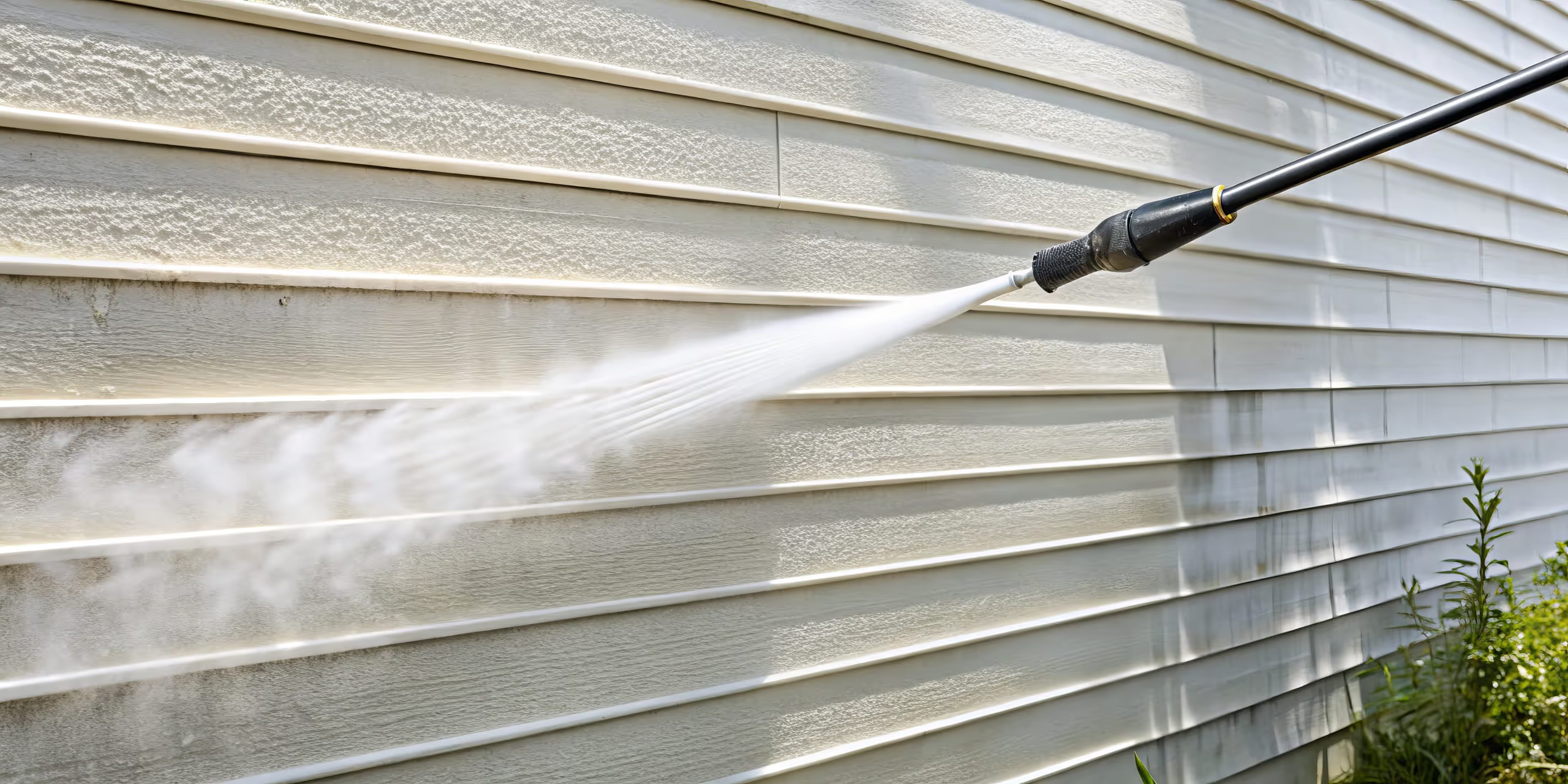
The call usually starts the same way. Somebody walks around the side of their own house for the first time in a year, gets to the north wall, and finds an elevation that looks a decade older than the front. Same siding, same age, same house. One side green and dull, the other side fine.
Nothing is wrong with that wall. It is just the side that grows things.
What the green film actually is
It is algae, most commonly a green algae in the Chlorella family, along with mildew and sometimes a fine moss where the wall meets the ground. It is a living organism, not a deposit. It does not blow onto the house and settle; it lands as a spore, finds conditions it can live in, and starts reproducing.
Those conditions are simple: moisture, shade, and something to hold onto. North Jersey supplies all three generously.
Why the north and east walls go first
The north elevation of a house never sees direct sun. Dew that lands on it overnight stays there for hours after the south side has dried, and through a humid Jersey summer that wall is damp far more of the time than it is dry.
The east wall is the runner-up. It gets a few hours of weak morning sun that burns off the dew and then goes into shadow for the rest of the day, which is not enough drying to matter much.
Then there is the canopy. Most of Morris and Passaic County sits under mature oak, maple, and pine, which is a large part of why people want to live here. It also means whole walls stay shaded all day and stay wet long after the rain stops, because the trees keep dripping. Add a foundation planting up against the siding holding humidity at the base, or a sprinkler head that clips the wall twice a day, and the growth has everything it needs. Across the wooded towns of Morris County this pattern is close to universal.
What makes it worse on a given house
- Overhanging branches within a few feet of the wall
- Shrubs planted tight against the siding with no air gap
- Sprinkler overspray hitting the wall rather than the bed
- A downspout that discharges against the foundation instead of away from it
- Textured siding, stucco, or cedar, which give the spores more surface to grip than smooth vinyl
What it does besides look bad
On vinyl, the honest answer is that it is mostly cosmetic in the short run. Algae does not eat vinyl. What it does is hold moisture permanently against the wall, and that matters at every joint, seam, and piece of trim where water can get behind something. On wood siding and painted trim, constant damp is exactly how paint fails and how rot starts.
There is a second cost people underestimate. Left for years, the green film combined with UV accelerates the chalky oxidation on older vinyl, and at that point you are not just cleaning a wall, you are trying to recover color that has partly gone.
What kills it versus what just knocks it off
This is the part that decides whether the wall stays clean for two years or two months.
Blasting the wall with a pressure washer removes what you can see. The colony is rooted into the texture of the surface, and the roots stay. Within a season, often less on a shaded wall, it is back. You also risk driving water up behind the panels, which is a much bigger problem than the algae was.
A soft wash works the other way around. A cleaning solution goes on at low pressure and kills the organism, roots included. It dwells, it does its job, and then the wall gets rinsed. The pressure never exceeds what the siding can take, and the result holds for years rather than months because there is nothing left alive to regrow from.
Bleach in a garden sprayer, which is the usual internet advice, will kill some of it on a small patch. It will also kill your foundation plantings, streak the wall where it runs unevenly, and leave you standing on a ladder doing the second story. It is the sort of thing that works well enough on one panel to convince someone to try it on a whole house.
How often it needs doing
Most homes here hold up well on a wash every one to two years. Heavily shaded houses under canopy, and houses in the wooded parts of Kinnelon and similar towns, tend to land on the shorter end of that. An open, sunny lot can stretch longer.
You can also buy yourself time for free. Trim the branches back off the wall, cut the shrubs back to leave an air gap, and adjust the sprinkler head that has been watering your siding. None of that stops algae, but it slows it down considerably.
If one side of your house has gone green and you want a straight answer on what it needs, call or text Nick at 973-897-1757. Estimates are free and I walk the property with you before quoting anything.